
Understanding Title Fraud
How a Criminal Can Steal Your $6,000,000 Building for $30 in Cash
In Texas, a criminal can steal your $6,000,000 building for $30 in cash. No ID required. No background check. Just a forged signature and a trip to the county clerk. Barrett Linburg explains how this happened to two of his buildings in 2022, which he describes below. If you own real estate, you are a target.
How the Texas Recording System Works Against You
The Texas county recording system operates on a “notice” basis. The clerk’s job is to record documents — not verify them.
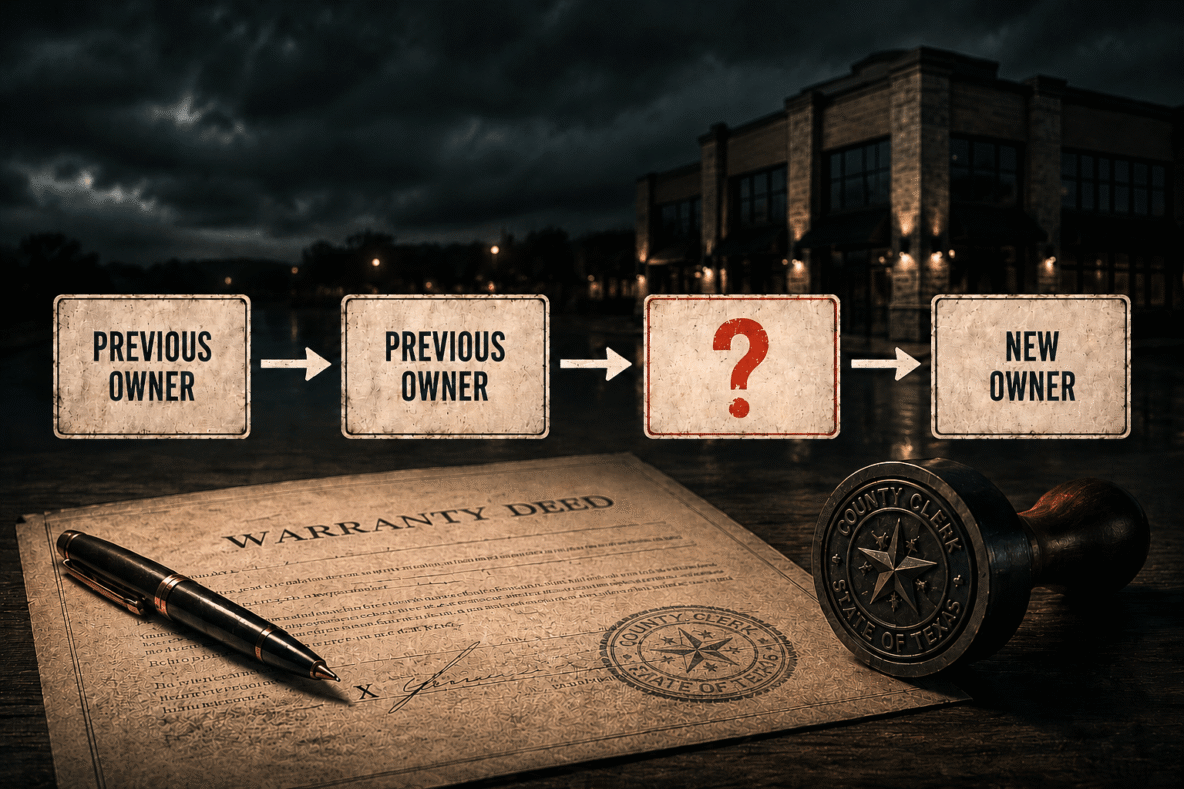
A criminal created a forged deed for two of our assets. They used a notary stamp cut from a separate public record and sent the documents through a courier. The courier handed over the paper and paid $30 in cash. The clerk accepted it. No driver’s license. No signature check.
Within seconds, the public record showed a Delaware LLC as the owner of my property. Six million dollars in equity vanished from the legal chain of title.
What Criminals Do Next
Once a criminal controls the deed, they have two moves. They sell the property to an unsuspecting buyer and disappear with the cash — or they take out a hard money loan against the asset, collect the proceeds, and vanish. Either way, they are gone before you find out.
I found out during a refinance. My title company called with a question: “Why did you quitclaim these buildings to a new entity?”
I hadn’t.
I contacted the Dallas Police Department, the FBI, and the Texas Secretary of State.
Every agency gave the same answer: they were overwhelmed with this type of fraud and did not have the resources to pursue it.
The criminals hid behind Delaware shells and registered agents. The county takes cash, so there is no bank trail. There is no ID requirement, so there is no face on camera.
Your Title Policy Does Not Cover This
Most investors assume their title policy covers deed fraud. It does not.
Standard title insurance covers defects that existed before you closed. It guarantees you received a clean deed at purchase. It does nothing for crimes committed after the fact.
This is a gap in your risk management you probably did not know you had.
What It Took to Fix
It took 90 days of legal work. The fraudulent owner was a ghost. I had to file a lawsuit to quiet the title, spent $20,000 in legal fees, and secured a default judgment because the criminals never appeared in court. I won. But I am out $20,000 and three months of sleep.
Who Criminals Target
Criminals focus on three categories of property: raw land, free-and-clear buildings, and estate properties. A mortgage acts as a natural tripwire because banks flag ownership transfers. If you own your assets outright, you have no automatic warning system.
What I Did After This Happened
1. Set up property alerts.
Most counties offer a free service that emails you when a document is recorded against your parcel number.
Sign up for every asset you own. It costs nothing.
2. Audit your entities.
Make sure your Secretary of State filings are current. Criminals actively search for lapsed registrations and dormant entities as indicators of an unmonitored owner.
3. Push for policy change.
State legislatures are beginning to act, but the law must require a government-issued ID to record any transfer of real property. The fact that it does not is indefensible.
